• About
  • Advertise
  • Contact Us
  • Privacy & Policy
  • Login
Webinar: From AI Potential to Operational Impact: What It Really Takes to Transform Field Service
  • Home
  • News
    • Aftermarket
    • AI
    • Asset Management
    • Digital Transformation
    • E-Commerce
    • Field Service
    • Parts
    • Pricing
    • Supply Chain
  • Events
  • Library
  • Subscription
  • Subscribe
No Result
View All Result
  • Home
  • News
    • Aftermarket
    • AI
    • Asset Management
    • Digital Transformation
    • E-Commerce
    • Field Service
    • Parts
    • Pricing
    • Supply Chain
  • Events
  • Library
  • Subscription
  • Subscribe
No Result
View All Result
No Result
View All Result
Home News

Research by Allison Transmission shows fleets could cut fuel bills by specifying different axle ratios

Research by Allison Transmission shows fleets could cut fuel bills by specifying different axle ratios
Research by Allison Transmission has revealed that many commercial vehicle fleets could cut their fuel consumption by requesting different axle ratios to those routinely offered on new vehicles.

Making this simple change to a truck’s specification costs nothing – yet can bring a valuable reduction in running costs and carbon emissions. Savings are likely to be greatest on duty cycles with frequent stop-starts around town or on minor rural roads.

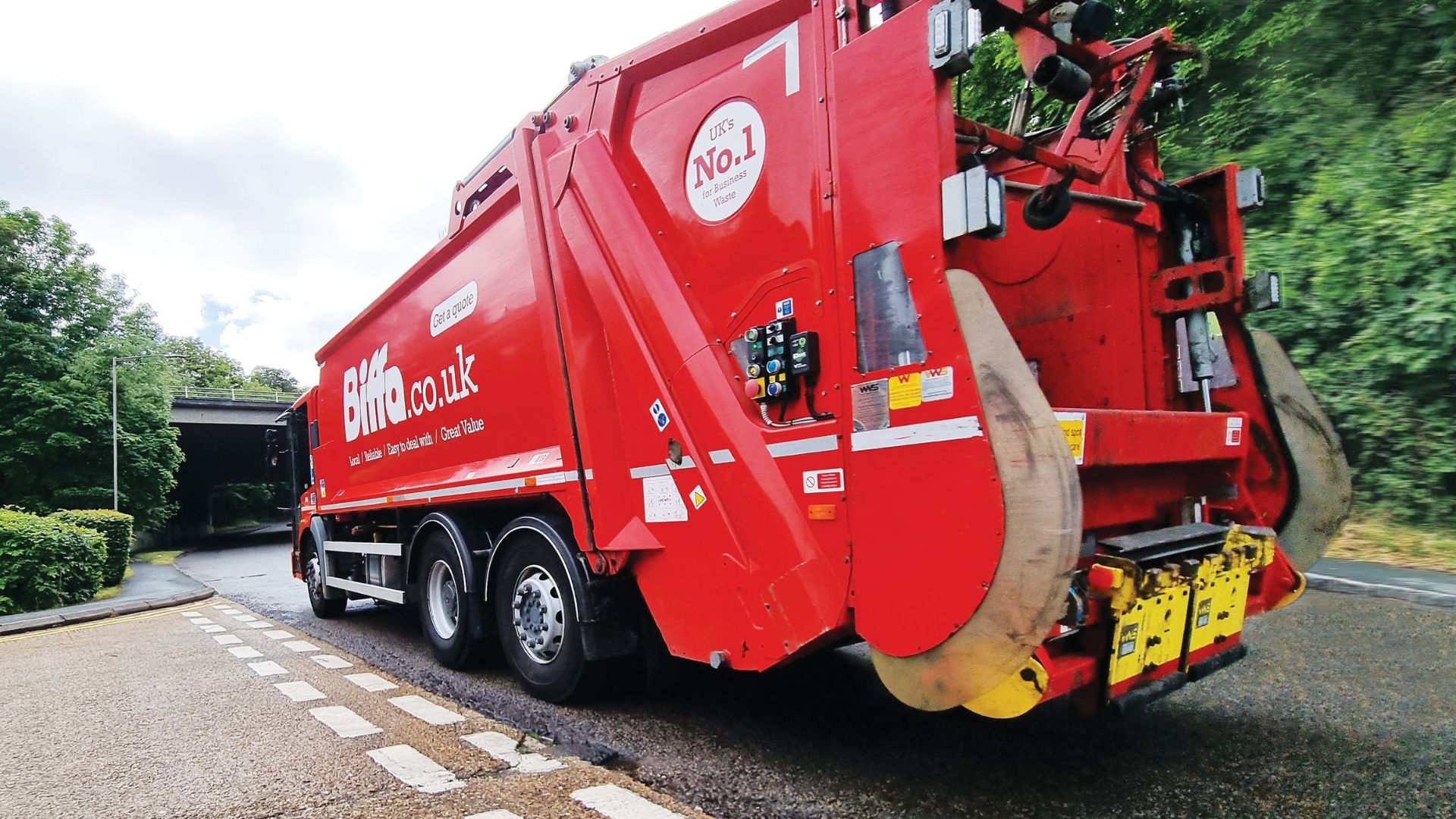
Leading UK waste management company Biffa recently worked with Allison to determine optimal axle settings for Mercedes-Benz Econic refuse collection trucks with 270-, 300- and 350-horsepower engines. By running simulations on its industry-leading iSCAAN software programme, Allison identified that switching these trucks from the standard 6.84:1 axle ratio to a shallower 6.0:1 ratio, also offered by Mercedes-Benz, could reduce fuel consumption by up to 3%, as well as lowering cab noise.

As a result, Biffa has amended its current order of 20 new Mercedes-Benz Econic trade waste collection vehicles, due to be delivered this autumn, with a further order of 18 to follow in spring 2023.

Other simulations by Allison have shown that adopting axle ratios numerically lower than those offered as standard by OEMs can reduce fuel consumption by 1-3%. This can be achieved without negatively affecting the vehicle’s launch gradeability or productivity thanks to Allison’s Continuous Power TechnologyTM, which nearly doubles engine torque at launch and delivers power to the wheels without interruption when shifting.

“Vehicle OEMs typically offer their fleet customers a choice of two or three factory-fit axle ratios and recommend one of these according to the country of use and application, making a sensible balance between performance and economy,” said Nathan Wilson, Allison’s UK Account and Market Development Manager. “Historically, a deeper axle ratio setting has been the default selected by OEMs to provide the best gradeability for a 30 percent and above incline. While this delivers a good fit for many customers, in reality, gradients of this extreme are rarely encountered on UK roads. Meanwhile, the pressure to reduce costs and environmental impact has taken centre stage in recent years.”

“Allison works relentlessly through a consultative approach with end-user customers and OEMs to help them save fuel as well as lower CO2 and other noxious emissions, in light of climate change concerns. As a result, we recommend axle ratio reviews when ordering new vehicles, which in most cases will not cost any more to buy, yet will cost less to own and operate,” said Wilson.

“We work with organisations like Allison to make sure we get the best advice to optimise our vehicles’ drivetrains, with the aim of reducing fuel consumption, CO2 emissions and total cost of ownership, without any loss in vehicle productivity,” said Darren Judd, Biffa’s Head of Fleet Development. “As a rule of thumb, every one percent fuel cost saving equates to a 100 rpm reduction. This might not sound like much, but over many vehicles and years it all adds up.”

Allison’s iSCAAN (internet System for Computerized Application Analysis) programme optimises vehicle configurations, evaluates vehicle acceptability and predicts vehicle performance for more than 20 vocational applications. Through matrix analysis, iSCAAN quickly evaluates changes to driveline ratios and shift calibration features. Furthermore, through simulation tools, iSCAAN evaluates the performance or fuel economy of Allison features, such as Acceleration Rate Management and FuelSense® 2.0.

In 2021, Allison announced the retrofitting of its FuelSense 2.0 software to Dennis Eagle and Mercedes-Benz Econic trucks operated by Biffa. This aftermarket order, now at 540 trucks and the largest of its kind within the EMEA region, followed a six-month trial in which Biffa found that FuelSense 2.0 Max delivered fuel savings of up to 9% and a reduction of approximately 4,500 kg of CO2 per year. This equates to approximately a £600,000 reduction in fuel expenditure per annum.

In 2020, Allison revealed that savings of £200,000 per year on truck transmission servicing costs were planned to be achieved by Biffa, as a result of advice provided by Allison to extend intervals for the renewal of transmission fluid and filters on its Dennis Eagle trucks. In addition, Biffa predicted savings of 3,600 hours in labour and vehicle downtime annually.


Further Reading

  • Read more about FSM Technology
  • Read more about Fleet Management
  • Read more about Allison Transmission on Field Service News
  • Discover more about Allison Transmission
  • Learn more about Biffa
  • Access over 25 premium resources on selecting and implementing FSM solutions (PRO)
Webinar: From AI Potential to Operational Impact: What It Really Takes to Transform Field Service Webinar: From AI Potential to Operational Impact: What It Really Takes to Transform Field Service Webinar: From AI Potential to Operational Impact: What It Really Takes to Transform Field Service
Previous Post

Durabook Adds Intel’s 12th Gen CPU to Its R11 Fully Rugged Tablet

Next Post

Why Your Business Needs a Service Intelligence Platform

Next Post
edit post
Why Your Business Needs a Service Intelligence Platform

Why Your Business Needs a Service Intelligence Platform

Stay Connected

  • 24k Followers
  • 99 Subscribers

Stay Connected

  • LinkedIn
  • Newsletter
The Pricing Execution Gap Playbook
  • Trending
  • Latest
edit post
Smart Wearables in Field Service: The Next Technician Toolkit

Smart Wearables in Field Service: The Next Technician Toolkit

June 5, 2026
edit post
Service Design in Action: From Theory to Field Execution

Service Design in Action: From Theory to Field Execution

April 17, 2026
edit post
Field Service Engineering at a Crossroads: Confronting a Perfect Storm in the Talent Pipeline

Field Service Engineering at a Crossroads: Confronting a Perfect Storm in the Talent Pipeline

May 25, 2026
edit post
Beyond the Buy Button: Rethinking Digital Commerce for Complex Industrial Sales

Beyond the Buy Button: Rethinking Digital Commerce for Complex Industrial Sales

May 7, 2026
edit post
From Razors to Rotors: Why OEMs Must Rethink E‑Commerce Before Their Margins Vanish

From Razors to Rotors: Why OEMs Must Rethink E‑Commerce Before Their Margins Vanish

June 12, 2026
edit post
Spare Parts Subscription Models: Building Predictable Revenue Streams

Spare Parts Subscription Models: Building Predictable Revenue Streams

June 11, 2026
edit post
Autonomous Warehouses: How Robotics is Transforming Spare Parts Storage

Autonomous Warehouses: How Robotics is Transforming Spare Parts Storage

June 10, 2026
edit post
Adaptive Pricing Strategies for Product Shortages

Adaptive Pricing Strategies for Product Shortages

June 9, 2026

Recent News

edit post
From Razors to Rotors: Why OEMs Must Rethink E‑Commerce Before Their Margins Vanish

From Razors to Rotors: Why OEMs Must Rethink E‑Commerce Before Their Margins Vanish

June 12, 2026
edit post
Spare Parts Subscription Models: Building Predictable Revenue Streams

Spare Parts Subscription Models: Building Predictable Revenue Streams

June 11, 2026
edit post
Autonomous Warehouses: How Robotics is Transforming Spare Parts Storage

Autonomous Warehouses: How Robotics is Transforming Spare Parts Storage

June 10, 2026
edit post
Adaptive Pricing Strategies for Product Shortages

Adaptive Pricing Strategies for Product Shortages

June 9, 2026

Brought to you by

Fieldservicenews

Turning knowledge into action for the manufacturing industry.

Follow Us

Browse by Category

  • Aftermarket
  • AI
  • Asset Management
  • Digital Transformation
  • E-Commerce
  • Field Service
  • Parts
  • Pricing
  • Supply Chain

Newsletter

Subscribe to our mailing list to receive news and updates direct to your inbox!

Sign Up
  • About
  • Advertise
  • Privacy & Policy
  • Contact Us

© 2026 Field Service News by Copperberg AB | All rights reserved

Ok

Retrieve your password

Please enter your username or email address to reset your password.

Log In
No Result
View All Result
  • Home
  • News
    • Aftermarket
    • AI
    • Asset Management
    • Digital Transformation
    • E-Commerce
    • Field Service
    • Parts
    • Pricing
    • Supply Chain
  • Events
  • Library
  • Subscription
  • Subscribe

© 2026 Field Service News by Copperberg AB | All rights reserved

Insert/edit link

Enter the destination URL

Or link to existing content

    No search term specified. Showing recent items. Search or use up and down arrow keys to select an item.