At first, Jason Smith wasn’t looking to become an evangelist for 3D printing. He was just trying to fix a broken supply chain. Ten years ago, while managing service operations for a Japanese company across Europe, he dealt with constant delays, rising costs, and long lead times.
The idea of printing parts on demand felt more like science fiction than strategy.Then he got a call. A 3D printing company was hiring a Director of Service. He said yes. Seven years later, Smith now leads field service for EMEA&I at 3D Systems.At Copperberg’s Field Service Forum 2025, he offered a grounded, practical look at how additive manufacturing is not just a future concept, but a working solution to today’s service headaches."For service managers under pressure to improve uptime, reduce costs, and support ageing equipment, the ability to produce parts on demand can be a competitive advantage..."
A Tool, Not a Trend
Smith is clear on one point. His aim isn’t to sell 3D printers but to introduce the idea of additive manufacturing as something you might add to your toolbox.
For service managers under pressure to improve uptime, reduce costs, and support ageing equipment, the ability to produce parts on demand can be a competitive advantage.
3D Systems, the company he represents, is no startup. Founded over 35 years ago by one of the inventors of stereolithography, it now employs more than 1,600 people worldwide.
The company supports a wide range of printers, from polymer-based extrusion and SLS systems to direct metal printers capable of building half-cubic-metre components for aerospace, defence, and oil and gas.
Not Just Plastics
In the early days, 3D printing was often associated with plastics. It still plays a major role in that area, with materials like ABS and PA12 used for housings, brackets, and connectors. However, metal is where progress has advanced significantly.
Today, 3D Systems prints in:
- Aluminium
- Titanium
- Various alloys
- Copper (with growing use in semiconductors)
The company even built a one-cubic-metre metal printer for the US Air Force, which is expected to launch commercially in the coming years.
Applications span multiple sectors. Aerospace and motorsport were early adopters. Formula 1 teams, for example, rely on additive manufacturing to rapidly iterate between races. Oil and gas firms use it for impellers and subsea components.
3D Systems also works with regenerative medicine partners to print structures for living tissue in a more experimental field. Recent progress has already shown gas transfer between printed cells—an early milestone in the development of functional organs.
"At its core, 3D printing converts digital files into physical components. But it’s not a plug-and-play solution..."
Responding to Real-World Problems
Despite the innovation, Smith’s message is rooted in real-world concerns. He outlines familiar supply chain issues:
- Long lead times
- Unavailable or obsolete parts
- High transport and inventory costs
- Political and economic disruption
- Increased demand for regional resilience
The Suez Canal, for example, has become a growing challenge for goods moving from Asia to Europe. Additive manufacturing, Smith argues, enables companies to reduce their dependence on traditional bottlenecks and produce parts locally or on demand.
How It Works in Practice
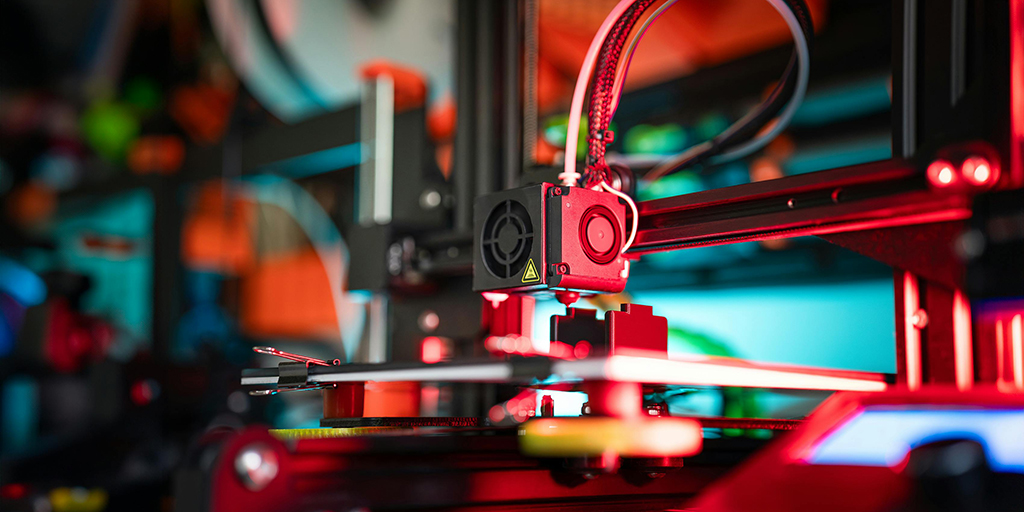
At its core, 3D printing converts digital files into physical components. But it’s not a plug-and-play solution.
The whole process requires:
- A 3D design file (via CAD or reverse engineering)
- Pre-processing and slicing the design into micro-thin layers
- Material selection suited to the part’s use
- Nesting and orientation for quality and efficiency
- Post-processing, such as heat treatment or machining
- Dimensional and functional verification
When these elements are managed effectively, the process can match or exceed conventional manufacturing in quality, while offering greater speed and flexibility.
The Aftermarket Advantage
For service teams, the advantage lies in strategic flexibility. Additive manufacturing makes it possible to:
- Produce spare or obsolete parts on demand
- Extend the life of legacy equipment
- Manufacture components closer to the point of use
- Reduce inventory by holding raw materials instead of finished goods
- Respond to urgent breakdowns with minimal delay
In one case, Smith’s team was able to continue supporting customers in Ukraine during an active conflict by adjusting how parts were delivered and supported remotely. In that kind of environment, the ability to create or source parts quickly is essential.
"For companies curious about additive manufacturing, Smith recommends starting with a single problem rather than jumping straight into investment..."
Where It Fits, and Where It Doesn’t
Additive manufacturing is not intended to replace every process, and Smith is careful to clarify where the technology works best.
Ideal scenarios include:
- Low-volume or one-off parts
- Obsolete or custom components
- Complex geometries
- Material-efficient builds where subtractive methods create too much waste
In contrast, with CNC machining or molding, high-volume production or extremely high-precision parts may still be more cost-effective. Traditional methods still hold the advantage in many areas of large-scale production.
Taking the First Step
For companies curious about additive manufacturing, Smith recommends starting with a single problem rather than jumping straight into investment.
Identify one issue:
- A part you can’t reliably source
- A recurring delay in your service process
- A legacy machine you still need to support
Then, reach out to service bureaus. These firms specialise in prototyping and short-run production. Many began as machine shops and evolved with the technology. They offer a lower-risk way to test whether 3D printing makes sense for your business.
3D Systems itself no longer provides full-scale service bureau work, having sold its QuickParts business to avoid competing with its customer base. It still offers limited on-demand printing in Belgium and the Netherlands for research and material development.
Smith is open to providing guidance and referrals.
More Control, Less Delay
In a service environment where uptime matters and supply chains remain volatile, additive manufacturing can help close the gap. It won’t solve every challenge, but it offers an alternative path for parts that are difficult to find, expensive to ship, or essential to continued operation.
For field service leaders looking for greater control and longer equipment lifecycles, that is no longer a futuristic ambition. It’s a tangible option, available now.
The only question is whether it belongs in your toolbox.
About Field Service News
Since 2023 Field Service News is a part of Copperberg AB.
Founded in 2009, Copperberg AB is a European leader in industrial thought leadership, creating platforms where manufacturers and service leaders share best practices, insights, and strategies for transformation. With a strong focus on servitization, customer value, sustainability, and business innovation across mainly aftermarket, field service, spare parts, pricing, and B2B e-commerce, Copperberg delivers research, executive events, and digital content that inspire action and measurable business impact.
Copperberg engages a community reach of 50,000+ executives across the European service, aftermarket, and manufacturing ecosystem — making it the most influential industrial leadership network in the region.