
In the final feature in this series of articles looking at the findings of an exclusive Field Service News Research run in partnership with FieldAware, we draw our conclusions on where the field service sector has adapted in the last six months to begin building a new normal…
There is no-doubt that the global lockdowns of the 2020 coronavirus have hit all of us hard, including the field service sector. Yet, despite talk of the pandemic continuing to dominate the news cycle and an ongoing fear, founded in uncertainties meaning some six months on we are still trying to piece together what recovery will even look like, across this study one can’t help but feel an undertone of positivity from our respondents.
Everywhere we look throughout the findings we see evidence of the impact of the pandemic, not just in the short-term financial aspects but in how we are shaping our conversations with customers, with our engineers and with each other.
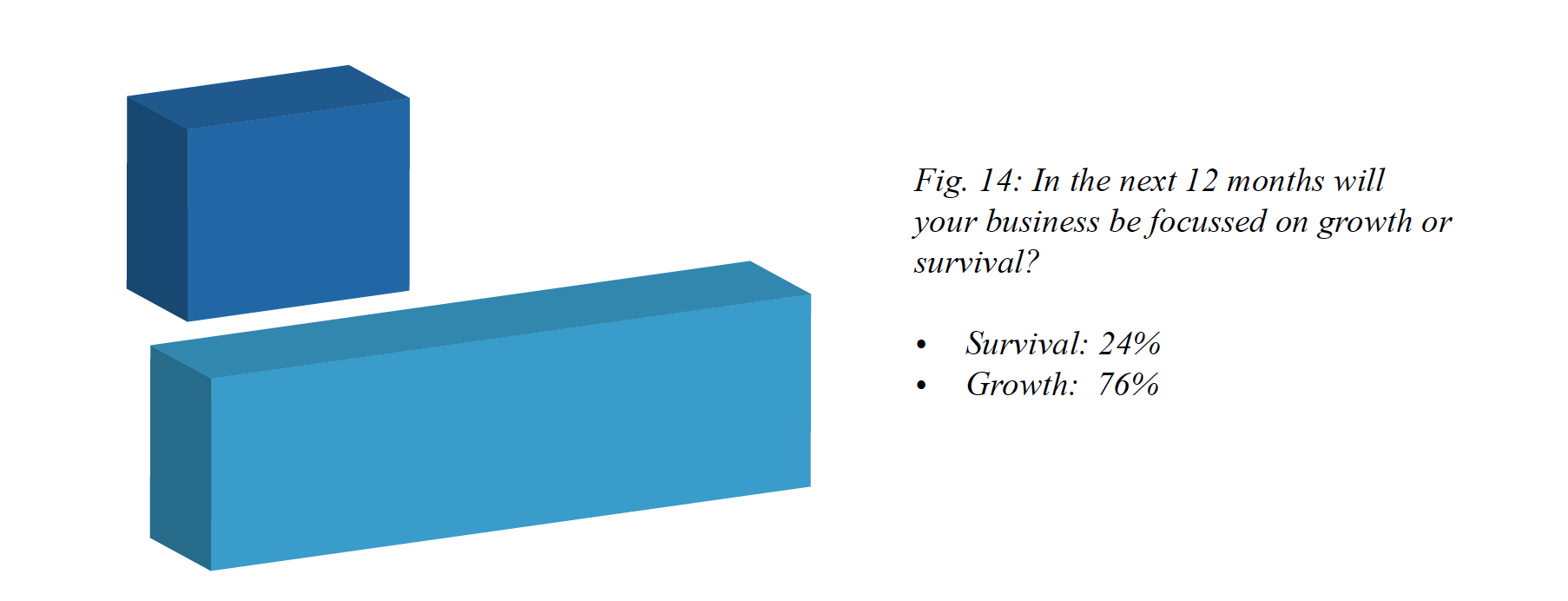
However, when we look at how field service companies are looking to the future one statistic within this report really shines out – in the next 12 months over three quarters (76%) of field service companies will be focused on growth rather than survival. This is a huge indicator in our sector’s belief in itself.
Indeed, the most singular effect the pandemic has had on our sector has been the acceleration of the widespread adoption of technologies and advanced service thinking. We have seen the facets that at the start of the year, were examples of best-in-class of field service, delivery become the mainstream.
As the study shows, the whole industry has taken a quantum leap forward in the last 6 months. The majority (73%) of field service organisations now have capabilities to deliver service remotely. The majority (84%) of field service companies now have their assets connected in the field. The majority (66%) of field service organisations now offer some form of advanced services, servitized or outcome-based service offerings.
We truly are on the cusp of a new era of field service, our industry has been slowly been building the blocks of evolution across the last decade. COVID-19 has simply put us all on the same page.
However, as with all growth and development there will come moments of pain as we shed the skin of our previous incarnation.
There are some challenging discussions ahead for many field service companies and the sector at large that the study has brought forward into the light.
Namely this is the growing dichotomy between the seeming desire of many in the field service sector to shift towards a remote-first approach to service delivery and the value proposition of the field service engineer.
Indeed, the very value proposition of field service itself, is something that we must re-examine as we look to the future. With remote service delivery, even though 60% of companies with such capabilities state that they only implemented them as a result of the pandemic, still 78% see remote services as an opportunity to develop new revenue streams. This is of course, a sensible approach to take with any new capability, but let’s take a brief moment to reflect on the value proposition of remote service delivery.
The benefits of remote service delivery in the immediate are of course the ability to deliver service within a zero-touch environment, protecting our customers bio-security measures. However, as we look beyond the current operating environment remote service delivery can deliver the customer quicker issue resolution.
Yet, almost half (48%) of the respondents still felt that the customer sees greater value in a face to face engineer service visit. Why? Perhaps the answer lies within how field service companies see the fundamental role of their engineers. With over half (54%) of companies seeing their engineers primarily as a subject matter expert and a further 27% seeing their engineers as a brand ambassador, the value for the customer of having the ear and advice of such an individual on site is self-evident.
In a world of outcome-based services, the quicker resolution of issues that remote service delivery offers is not just a benefit it is essential. Yet, the study suggests it is the customer’s access to the expertise, knowledge and insights of the field service engineer is where the true value perception of field service delivery lies. It is hard to see how such intimate trust-based relationships can be replicated remotely.
Within this report the notion of a hybrid model of service delivery has been suggested and this could indeed be a strategy that we will see emerge.
While the permutations would vary within differing organisations, broadly speaking it would be easy to envision most routine service being undertaken remotely with an allocation of on-site visits taking on more of an opportunity for an engineer to offer guidance on how to get the best out of the assets while performing some analysis and adjustments to the assets to offer the customer enhanced optimization where possible.
“The infrastructure for connected service has been built. The thinking for advanced services has been considered. Now as a result of necessity the digital transformation required has been accelerated…”
This is just one example of how a hybrid model that blends remote service delivery and enhances the importance of the onsite service visit could work, but as the study suggests some similar forms of hybrid models will inevitably need to emerge given this emerging dichotomy will need addressing.
Discussion about what the new normal will look like in a post-pandemic world has been so prevalent that in just a matter of months the very phrase ‘new-normal’ has started to become hackneyed.
However, it is of course a conversation that we must have as we look to the future. For the field service sector though, this study would indicate that the new normal will look very much like what best-in-class service delivery has been evolving into for quite some time now.
The infrastructure for connected service has been built. The thinking for advanced services has been considered. Now as a result of necessity the digital transformation required has been accelerated.
The field service sector is ready for its next phase of evolution. One that has been building across a decade, brought to fruition by the greatest disruptor we have ever known. For the third (33%) of companies who have had to reduce their available budget for digital transformation projects, while survival must be the first reaction to this crisis, it is a dangerous time to be left behind in terms of technology and service-thinking.
That future has already begun to emerge and it is those companies who seize the opportunity to grow, develop and evolve with the market in these first years of a new era that are best placed to flourish.
 Want to know more?
You can find the full paper in the premium resource library