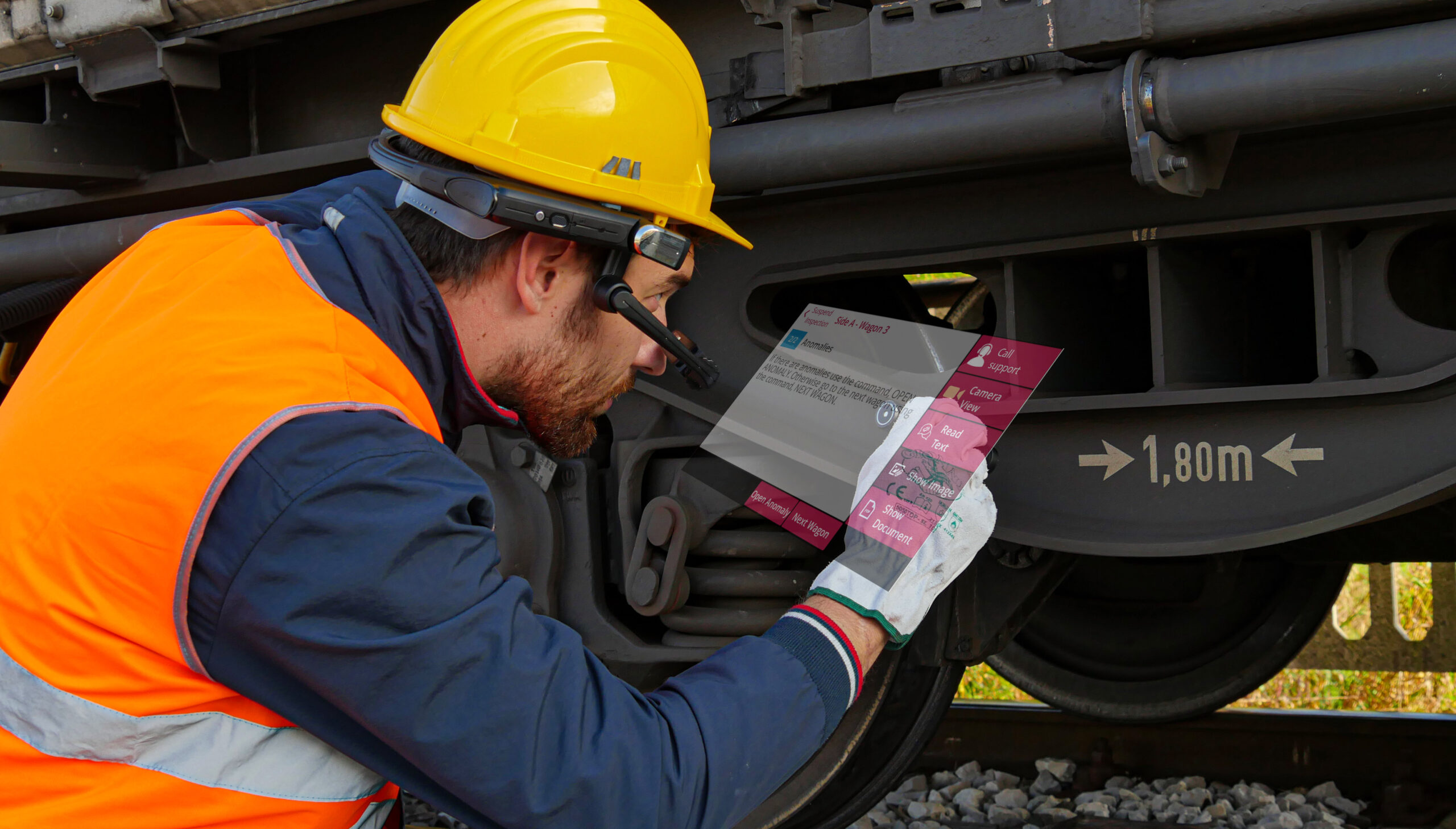
Our study confirmed what many of us in the industry suspected to be true. The infrastructure of connected field service appears to be in place. We are very much ready to move into the second phase of this evolution and begin to fully embrace IoT enabled service delivery.
The question is how much has the pandemic accelerated IoT evolution?
Having undertaken an extensive research project with FieldAware in the latter months of 2020 we released a ground-breaking report that identified the emerging trends of the new normal. Having assessed the sectors opinions at the time we then returned to interview a selection of the respondents to go Beyond the Data and leverage deeper insight.
The following article is an excerpt from a report based upon those interviews as well as our exclusive debrief session.
When we look at the emerging picture of what field service delivery looks like in the new normal and the shift towards faster remote-based triage and issue resolution, the importance of the Internet of Things (IoT) cannot be overlooked.
In one way, the data from the study suggests that we have reached a point where the IoT has become a commonplace inclusion within field service operations. At the headline level, this certainly seems to be the case with over three-quarters of the respondents (76%) stating that they have the capabilities to read data from the field.
Yet, when we dig deeper into how many companies were able to effectively turn that data into automated insight by implementing smart sensors and alerting updates to monitor asset usage and performance status over half (55%) of field service companies with connected assets have yet to take this next step.
As we commented in the initial report in this study, this would suggest that the while we can firmly state we are in an IoT-focused era of field service management; our industry at large is yet to leverage the potential of such tools fully. However, as we began to go beyond that data in our series of follow up interviews, it became apparent that this a shift that is likely to happen soon.
“We are currently exploring what more we can do with the data we can get from our install base,” commented one respondent, a Director of Field Services for a manufacturing company working within the pharmaceutical sector who has responsibility for the South African region.
“To be honest, the end game for us is to use RPAs [Robotic Process Automation] to trigger a service call and really drive us towards almost being fully proactive in service delivery,” commented another who is the Technical Service Manager for a solution provider service the Oil and Gas space.
“We are doing quite a lot of work around taking data from our entire install base and modelling optimum performance for our customers’ environments based on that mass data. There are some challenges to resolve particularly in terms of data ownerships and anonymizing data security protocols with our client base, but there is a huge appetite for this amongst our customers and we see this as brining massive value to the table, which is something other service providers wouldn’t be able to achieve,” explained a third respondent, head of services for an industrial manufacturer based out of the Nordic region, when asked where the next layer of value would come from regarding IoT.
“We also use that data as engagement tool with our customers. We are able to bring a level of transparency to our customers so they can see how the service we provide is bringing them value. I would say that we are generally, very effective in our approach to how we leverage data…”
Indeed, while the foundations appear to be laid and ready to be built upon in terms of connected field service, it does seem that we are the cusp of the emergence of the next transformative period in this area.
“IoT has been around for a while we’ve been talking about it for a while as an industry. But I think there’s been a hesitancy about adopting and utilizing some of the technology that’s out there,” comments Tatarsky.
“What we are seeing as indicators coming out of the study is that there’s a maturity curve we are on. I think we all appreciate the fact that there are different stages of maturity and adoption that new technologies go through and the pandemic has created an inflexion point for accelerating that maturity.
“However, what that acceleration cannot do is push the technology from being immature to being fully mature, in one fell swoop. Yet, it does provide a catalyst for those that maybe had some resistance to utilizing either technology or the insights from that technology, to embrace further the change in our industry. It is this broader embracing of such tools that is going to accelerate adoption, and, in the long term, maturity of it across the sector.
“What we’re seeing coming out of the study is that some of the barriers are down, and the pandemic has forced those to come down. It also has forced people to think differently about how they can deliver services, and where they’ll get the data and the insights to be able to deliver those in a different model. IoT certainly provides the opportunity to do that and begin to create a this hybrid model we’ve been alluding to,” Tatarsky adds.
Regarding the effectiveness of data usage, there are two distinct sides to the discussion, as Mason explains.
“With regards to the effectiveness of how an organization is utilizing the data they are receiving from the field it really comes into two aspects,” he begins.
“The first aspect is that a company is analyzing, interpreting and predicting the data correctly so that they can clearly indicate when something is going out of tolerance and needs to be acted upon
“The second element in the process and value chain is then how do they engage with that data. Triage has a vital role in IoT as well. You often need to have an expert opinion to analyze that data to determine the severity of it and how to enrich what’s required to go on site. That triage, which can be done by remote technicians, is an important factor as well.
“Then there is the question of how you interact with your customer, how you communicate with them. Bear in mind that often there will be things moving out of tolerance that need to need to be resolved, but the customer is completely unaware of it. Being able to proactively communicate to your customer, to notify them when engineers are coming on site, and when they’re going to be there – especially if you’re working on assets which move around geographically like some of our customers do.
“This is all part of effective customer communication and this allows you as a service provider to achieve the desired outcomes which are very high first time fix rates.
Indeed, another of our respondents director of field service operations for a global organization in the mining and aggregates sector echoed Mason’s insights.
“We are quite forward thinking in our how we use data and we effectively use it in two key ways,” he explained.
“Firstly, we use it as a tool to drive our approach to push our service operation progressively more and more towards proactive rather than reactive service. For us, this is critical, as downtime in our sector is very costly.
“However, we also use that data as engagement tool with our customers. We are able to bring a level of transparency to our customers so they can see how the service we provide is bringing them value. I would say that we are generally, very effective in our approach to how we leverage data.”
 Want to know more?

FSN PRO and FSN PRO+ users can find the full paper this article is taken from in the premium resource library.